In this guide 7 sections
Phone cameras are good enough that the thing separating an amateur reel from a watchable one is almost always sound. A phone's built-in microphone is a metre too far from the speaker and picks up the room. A wireless lavalier clipped to a collar fixes that for less than the cost of a tripod. This guide covers what to buy and the one detail that stops it working.
How a wireless lav kit works
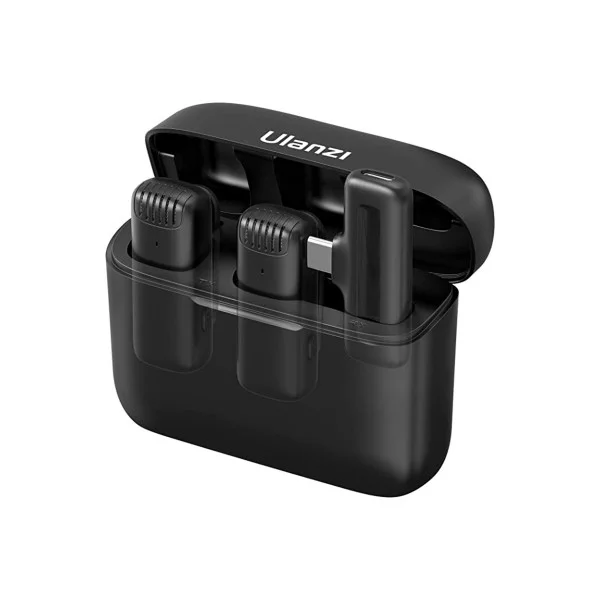
A transmitter the size of a matchbox clips to your shirt; a receiver plugs into the phone's charging port. Kits like the Ulanzi J12 dual mic come with two transmitters for interviews or two presenters, a charging case, and foam windshields. Range is tens of metres indoors — more than any room needs.
The connector decides everything
Receivers come in USB-C (most Android phones, recent iPhones) and Lightning (older iPhones). Buy the wrong one and the kit will not plug in. If you switch between phones, a small Type-C to Lightning adapter solves it. Check the listing's connector before anything else.
One mic or two
- Single — vlogs, product videos, cooking, tutorials. Simpler and cheaper.
- Dual — interviews, podcasts, two-presenter reels. The receiver mixes both; no second phone needed.
Noise reduction, honestly
Built-in noise reduction on budget kits cuts steady hums — fans, traffic rumble — and helps a lot on a Dhaka street. It does not remove a neighbour's conversation. Always use the foam windshield outdoors and keep the mic about 15 cm below the chin, clipped firmly so it does not rub on fabric.
Camera-ready: the BOYA option
If you also shoot on a DSLR or mirrorless camera, a kit like the BOYA Magic 05 with a 3.5 mm camera output works across phone and camera. Check whether your camera needs a TRS or TRRS plug; most kits include both cables.
Phone settings that matter
Plugging the receiver in is only half the job. On Android, open the camera app's settings and make sure the audio source is set to the external or USB microphone; some phones keep using the built-in mic until you switch. On iPhone the receiver is picked up automatically in the Camera app, but third-party apps may need the input chosen in their own settings. Turn off the phone's own noise reduction when the mic kit has its own, or the two fight and the voice sounds hollow. Finally, lock the exposure and focus before recording so the picture does not pulse while you talk.
Set-up that makes it look professional
- Phone on a tripod at eye level — the Jmary MT-27 mini tripod for a desk, the Ulanzi MT11 octopus to wrap onto a shelf or railing.
- Mic clipped at chest height, windshield on, transmitter switched on before you hit record.
- Light from the front — a window is enough indoors.
- Record a ten-second test and listen on earphones before the real take.
For interviews on the move, a handheld mic holder turns a lav transmitter into a reporter's mic. Everything on the content creation & streaming shelf ships cash on delivery nationwide.
Frequently asked questions
Which wireless mic works with my phone?
Match the receiver connector: USB-C for Android and recent iPhones, Lightning for older iPhones. The listing states which version the kit is.
Do I need a dual mic kit?
Only for two speakers at once — interviews or two presenters. For vlogs and product videos a single mic is enough.
How far does a wireless lavalier mic reach?
Tens of metres with line of sight — more than any room or a street interview needs.
Can the same mic work on a phone and a camera?
Kits with a 3.5 mm camera cable, such as BOYA models, do. Phone-only kits have a USB-C or Lightning receiver and no camera output.